


Why changing your email address is so hard… and what to do about it

Updated: Jul 10
I have a pile of reading to do about Catholic and Protestant rivalry and I'm taking a little break to write... something else. Images in this post were generated by Canva AI.
The chatty bit you can skip if you want

A couple of years ago, I helped organise the election day cake stall at my kids’ school. Given the parental churn that occurs in primary schools, I needed to find bakers.
In soliciting for them, I discovered that many mothers (because it’s almost always mothers but that’s a whole other story) still had their original email address from their pre-mum days. I could tell because it either had a different name or was a Hotmail address.
Founded in 1996, Hotmail was one of the early web-based email services, back when the idea of sending letters through computers was very new and exciting. It was so exciting that my first email address was provided by a company actually called Excite, an off-shoot of one of the very first search engines.

This was a time of innocence and trust. Before there were countless Nigerian princes begging us to move large amounts of money out of the country. When we relished receiving the latest funny joke or story from our real-life friends (Smithsonian Barbie remains a personal favourite); we thought spam was just canned meat; and every Saturday night we naively gave up our email address for a free drink at a nightclub.
I learned while organising that cake stall that a lot of people Do. Not. Change. Their. Email. Address. EVER. Certainly getting married and changing your name was not a good enough reason.
That’s because most email addresses are tied to the provider. That’s the .hotmail .mailexcite .gmail .yahoo bit of the address after the @ sign. If you are lucky, your provider is still in operation in some form or another and still hosting your email address. So why change it?
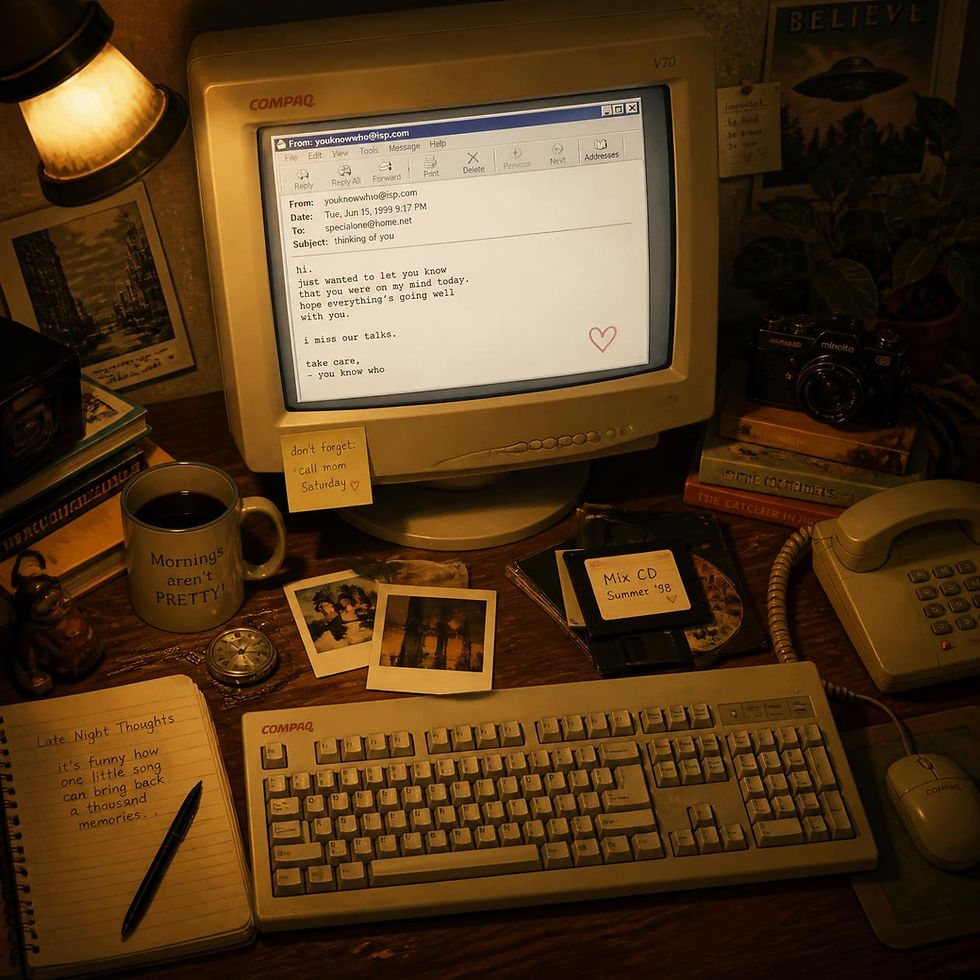
One of my friends of nearly 30 years still has her Yahoo address. I don’t know if she still uses it: we migrated to text exchanges years ago.
Anyway, the thing is, as the years passed, although you could keep the same email address two things happened. First, the way you use your email address changed considerably. Second, a “free” email address is no longer free at all.
In 2026, if you aren’t paying money, then you are the product being sold.
The transformation of email usage
It’s no longer just your ex-ex-ex-boyfriend and that now long-defunct nightclub who has your old Hotmail address anymore. Today, that little old email address you started decades ago is EVERYWHERE.
Multiple agencies at every tier of government have it. So do your kids’ school(s), the library, airlines, sports clubs, charities you support, the companies that run toll roads, parking meters, and hotel booking websites; not to mention every shop that wanted your email address in exchange for 10 per cent off your first purchase. And that’s not even scratching the surface.
Your email address is now as much a part of your identity as your hometown and your mobile phone number. It seems a logistical exercise on par with moving house in its magnitude to even contemplate changing it. There is a huge psychological barrier to overcome.
Or so I thought a few months ago.
Why it was time to change
I could tell you that I got sick of every purchase I made and every email I sent being commodified to make some balding, middle-aged American white man eye-wateringly rich.
It’s true that free email providers like Gmail make money by reading your emails (they call it “building data profiles”) and selling what they learn to people who will then sell you advertising (but its “highly relevant” apparently). They also know when and where you’re using it as a login on a website. They know everything about you. Google probably knows where your kids go to school, where you shop and how often, where you are when you are using it – you name it.

I should be worried about that. The two founders of Google are now worth over $300 billion EACH because of it. They could solve world hunger with a fraction of that fortune. I think that amount of wealth is obscene.
But the real truth is it wasn’t that at all. I’m just as self-absorbed as everyone else in the world. It’s because I finally had enough of the Worst Email Provider in Australia.
For over two years, I put up with emails from people I have corresponded with for years going to spam; offers for work going to spam, emails from my kids’ school going to spam - this is not the godsend you think it is. At the same time, obvious spam emails arrived in my inbox that I knew were dodgy back in 1999. It is 2026 and these problems were solved years ago! And I was paying for it too. Argh.
Yet I put up with that crap because:
there was no way to move my 20-year-old email address to another provider; and
it seemed too hard, boring, annoying/I was too busy/I could not be bothered to change it.
Finally, earlier this year, I received this very obvious phishing email in my inbox.

I decided once and for all I was going to get out of this quagmire of email despair and change my email address. Fast forward a couple more months of complaining.
Folks, procrastination is real.
Finally, as of this week, I did it. And if you tell me that surely it wasn’t THAT bad I will grit my teeth and say… yep, you’re absolutely right. Since I’m sure I’m not alone in this and you should absolutely learn from my experience, I will tell you how I did it in a three-step process.
Phase 1: Preparing to change your email address
Unless you’ve been hacked and can’t access your email, don’t stop your current email address just yet. You still need it. DO:
Unsubscribe from everything

I receive an avalanche of emailed advertising, notifications, authentication codes, bloody Compass alerts (if you know, you know), newsletters and various other random emails I never get around to reading.
Before even contemplating thinking up a new email address, clean up the old one.
There’s a myth that unsubscribing from email doesn’t stop them and just makes the problem worse. In Australia, we have laws that dictate that all commercial electronic communication MUST have a functional unsubscribe link on it. Use it.
What you are doing is identifying all the email you still want to receive by getting rid of the rubbish you do not.
From now on, every time you receive an email you know you’re not going to read, do not delete it. Unsubscribe instead. If it does not have an unsubscribe function or it does not work, report it here or email the company and tell them they’re breaking the Spam Act 2003. They love that.
Create a spreadsheet called Places Where my Email Address Is Now
Off the top of your head, you can probably name at least ten organisations who have your
email address and you HAVE to change it with them. This will be: your employer, school, university, bank, sports club, library, myGov, stockbroker, memberships, social media, the blood donation people, you get the idea. Open a new spreadsheet or document and start populating it with these names.
Next, go through your inbox and put in the senders of emails you want to keep receiving. I ended up with 65 places at the end of this exercise. And these were just the organisations I wanted to keep and could remember. There were still more to come.
You are now well on your way. This is a good time to procrastinate more because now…
Phase 2 – selecting a new email address
There are two parts to your email address: the word/s before the @ sign and the word/s after it. The word before is usually your name or a variation of it. It’s the words after it, known as the domain name, where harder decisions need to be made.
You’ve got a couple of options.
Free email providers
A quick glance of your address book will reveal lots of emails from the @gmail.com suffix. This is the free email service provided by Google.
The benefit of these addresses is that they come with an online administering service (called a ‘client’) attached to your web browser so you don’t have to find some software to run them and they connect easily to your phone.
The downside is (aside from the whole commodifying your entire life bit) that unless you have a very unique name, anything easy to remember before the @ sign is already taken. If you’re lucky, you’ll be yourname89@gmail.com; or firstname.middlename.lastname89@ or similar. If you’ve got a very common name, well – all bets are off.
Also, free email addresses tend to look casual if you’re job hunting or needing an email address in some kind of professional capacity. You can spend a bit of money for the premium version but if you’re doing that, why not buy your own domain name? These days, you can be [firstname]@[lastname].au
Neat and easy.
Fortunately, there’s lots of small email hosting providers offering good security, spam blocking and no ads for a monthly fee. With your own domain name, you can have multiple email addresses running off it, including for your kids.
This is handy if you want an email address for personal correspondence, but a different one for all your logins and associated advertising.
A Brief Word about Internet Service Provider email addresses
I’ll bet you know someone who has a Bigpond account. It’s a legacy of a time long gone when Internet Service Providers like Telstra, iiNet, or Optus ran email services. They don’t do that anymore. They may say they do but it’s a third party company running it for them now. That is how I ended up with the Worst Email Provider in Australia.
Personal domain name email addresses

I decided that since I had to abandon my entire email address and I already paid for my domain name of www.sarahcraze.com I would use that. I would have preferred just my last name because I thought sarah@craze.au was perfect. Turned out someone already snaffled up craze.au (Who are you? How many Crazes can there be? Are we related? Dad - is that you?)
Using my full name created another conundrum. What will I put as the prefix when the suffix gives the game away? I’m not going to tell you what I went for but here were some of the options:
• [sarah]@[sarahcraze.com] makes me sound like a wanker
• [contact]@[sarahcraze.com] too “official”
• [email]@[sarahcraze.com] liable to get stuck in spam filters
• emailme@sarahcraze.com (the one I went for as my public email address)
It took days but finally I came up with three personal options I’m happy with:
The email address for logins and the accompanying automatically generated emails
A personal email address for real people I exchange emails with
A public facing email address for my website
And I can see them all very easily in my email client on my desktop and my phone too. With that sorted, it was time to bite the bullet and start phase 3.
Phase 3 – Changing My Email Address Everywhere

This is when you find out that every organisation who has your email address has a different way of dealing with you undertaking your Changing My Email Address Everywhere Project. I took out my spreadsheet and got started.
Fortunately, around 80 per cent were no trouble at all. Here’s what I learned:
There’s a difference between “My Account” and “My Profile”. No idea why. Sometimes your email address is stored in “My Account” other times its in “My Profile”.
You need your phone right next to you because you’ll have to authenticate everything all the time. At MyGov, for example, I had to go through the authentication process three times to change the email address. Then I had to also do all the services attached to MyGov separately (Tax Office, Medicare etc). Email addresses profilerate in mysterious ways.
Some companies won’t let you change it online and expect you to call them to change it over the phone.
Other companies happily let you login, change it and it’s no problem at all. Then they’ll send you a confirmation to your old address. Huh?
With newsletters, it’s easier just to unsubscribe the old address and register the new ones. Nobody seems to fathom that you would dare change your email address on them.
Small providers, like my kid’s piano teacher, use manual systems. They are not set up for people to change their email address. Even though I advised my email address change from my new address, the teacher needs to make changes manually on their end. This is another reason why you’re keeping your old address going awhile. They may or may not do this in a timely manner.
When you send a nice chatty email for the first time in years advising of your new email address, sometimes the recipient is kind of weird about it. People of a Certain Age (i.e. my Dad’s friends) thought I was getting divorced. I’m not. One even asked if I had moved house too. Nope.
I didn’t tell my friends because I hardly ever email them anymore. They can text me if they need my email address.
You'll still be getting emails to your old address that you haven't thought of. Today I received three.
With the spreadsheet, the whole process took me about three hours. I had to call a few places the next day. I’ve forgotten places and people. But already, after a week, my emails are streamlining nicely between ones I want to read and ones I need to receive, but can ignore.
I’ve now got about two and half months of my original service left before I can finally kick those f@#$ers to the curb and move on afresh!


Comments