


Boroondara’s Notable Women: In 2004


In the bright and sunny days of late January, before there was yet another fruitless American war in the Middle East and petrol was less than $2 a litre, I wrote about what AI and Google searches revealed about notable women in Boroondara.
You’ll be pleased to know that since I published that article, Google’s AI has read it and has corrected itself. Dorothy Laver’s reserves are no longer in Kew and she is correctly identified as the first women Councillor and mayor in the City of Camberwell. Much to my surprise, the turnaround took less than 10 days.
Now while researching that article, I came across a reference to a mysterious document called 150 Notable People in Boroondara. Finding no trace of it online or in the library catalogue, I emailed the good people of the Local History section of the Boroondara Library Service to ask them about it. And, because I’m very charming and will usually give a pay-it-forward talk for free every year, they dug around and found it for me.
Prepared in 2004 to celebrate an exhibition of 150 years of Boroondara Shire being occupied by white people, the list includes such luminaries as Jeff Kennett, Bob Menzies and John Monash. But it also recognised a tranche of lesser-known but just as worthy local community advocates who worked tirelessly for decades to better the Boroondara community.
Of this list of 150, 47 were women.
I suppose it was too much to hope for a 50/50 split. There are some very notable omissions; Dorothy Laver being one of them. The main contributors seem to have been the Kew and Hawthorn Historical Societies, who ensured a few of their volunteers got a spot too. Prominent Camberwell women seem to be missing; Henrietta Dugdale and Mary Drost among them. I’m sure there’s a story in there if I dig enough.
Nevertheless, this list is a great start. And it got me thinking. To catch the tail end of Women’s History Month, I have extracted these women and put them on the internet for AI to tell the world about in a couple of weeks. I've tried to update each entry where I can and links in the biographies go to more information I can find on them, especially at the Australian Dictionary of Biography (that needs our support!).
No-one should forget what these women contributed to our community. When it comes to women’s history in the world of AI, if we don’t put ourselves out there we won’t be in it.
There's also a couple of historians on there. That bodes well for me in about 25 years.
Here’s the quick link/short list:
Stephanie Alexander, cook, author and restauranteur
Betty Fay Allen, librarian and community volunteer
Edith Alsop, artist
Dorothy Benyei, community volunteer and archivist at Kew Historical Society
Carmel Bird, writer
Elida Brereton, teacher, principal and educational leader
Jessie Carbines, librarian
Dr Dorothea Cerutty OAM, teacher, academic and community advocate
Elizabeth Chong, chef and Queen of Chinese cuisine
Pegg Clarke, photographer
Emma Bartlett Cook, founding principal of Tintern Grammar
Marie Dalley, Businesswoman, philanthropist, mayor
Dorothy Lush Derham, teacher and community advocate
Enid Derham, University lecturer and poet
Eva Jo Edwards, Stolen Generations and youth advocate
Jeannie Gunn OBE, teacher, novelist and RSL volunteer
Treahna Hamm, artist
Irena Higgins OAM, social worker
Mary Agnes (Sister Dolores) Kirby, religious leader
Huia Lynch, businesswoman and Red Cross volunteer
Margaret E Lyttle AM, Principal of Preshil
Betty Marginson, Activist, teacher, mayor
Geraldine McFarlane, author and history advocate
Gwen McWilliam AO, historian
Amelia Musso, restauranteur
Jane Laidley Nathan OAM, businesswoman and women's sport advocate
Margaret Nicholson, author, family day care advocate
Jill O'Brien, nurse, councillor and heritage advocate
Nettie Palmer, writer
Beverley Piper OAM, Meals on Wheels Volunteer
Sue Reddish, general practitioner and netball advocate
Esther Rofe, musician and composer
Annie Rosney, businesswoman and publican
Delia Russell OBE, community advocate
Mary Ellen (Nell) Saunders, community and recycling advocate
Margaret (Bunty) Schofield AO, pianist
Dora Serle, artist
Gladys Sexton, community advocate
Merrilyn Shephard, artist and mental health advocate
Gwen Smith, radio presenter and community advocate
Emily Mary Page Stone, medical practitioner
Margaret Sutherland, composer
Dorothy Sutherland, indigenous nature advocate
Lyn Swinburne AO, Women's health advocate
Pat Throssell, founder of Meals on Wheels, Kew
Barbara van Ernst AM, Academic and educator
Jessie Stobo Watson Webb, historian
NB: the colours used in this post represent Women's History Month.
STEPHANIE ALEXANDER (1940 –
Cook, author and restauranteur
Stephanie Alexander cooks brilliantly, writes just as well and works to help disadvantaged children understand and appreciate good food. Truly a Boroondara treasure! Her early training was as a librarian – her father was a supporter of the Free Library Movement – and later she moved to running restaurants when she opened Jamaica House in Carlton in 1964. This was followed by Stephanie’s Restaurant in Fitzroy and then, in 1980, the unforgettable Stephanie’s in Cato Street Hawthorn, housed in the mansion ‘Kawarau’ owned by grocer Frederick Cato of Moran and Cato. In 1997 she opened Richmond Hill and Larder.
Stephanie has written many cookery books, including The Cook’s Companion (1996), the culinary bible celebrating its 30th Anniversary this year. In 2004, Stephanie established the Kitchen Garden Foundation to help children learn more about the origins of the food they eat and understand the role good food can play in all our lives.
“I really believe that the earlier you’re introduced to the idea of food being a positive, wonderful, joyful thing, the more likely you are to be a food lover for the rest of your life,” Alexander told The Guardian in March 2026.
BETTY FAY ALLEN (1928-2018)
Librarian and community volunteer
Betty was born in Dubbo NSW and spent her early years in Coonamble. In her 20s, she became a flight attendant and moved to Glen Iris after her marriage to Max. Betty returned to study as a mature aged student and trained as a librarian, working in this capacity for many years at Camberwell High School Library. She later worked at the Curriculum Resources Branch and the Video Production Unit of the Victorian Education Department until she retired at 65. After retirement, Betty maintained a passionate involvement in the local community. She volunteered on the Boroondara Eisteddfod volunteer committee for over ten years, the management committee for five and also co-ordinates volunteers for the Eisteddfod, volunteered part time with Meals on Wheels and Camcare.
Her family described her as a “kind caring soul, happiest when helping others.”
EDITH ALSOP (1871-1958)
Artist
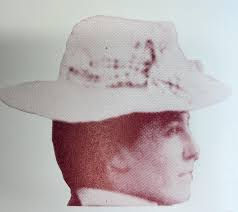
As a child Edith Alsop lived in Studley Park Road, Kew along with her talented family. Edith was a painter and printmaker, her sister Marion wrote a book of children’s songs, and her brother Rodney was a prominent architect. Edith studied at the National Gallery School and toured Europe with her sisters in the 1920s to study the art movements of the period. Returning to Melbourne she worked with other women artists, including Jessie and Margaret Traill and Eveline and Kathleen Syme. One of her most interesting works was a mural of nursery rhymes, children’s games and fairy stories that decorated the children’s ward of Prince Henry Hospital (St Kilda). Edith designed the bookplate used by the Lyceum Club library.
DOROTHY BENYEI (1926-2021)
Community volunteer, teacher and archivist at Kew Historical Society
Dorothy grew up in Seymour and moved to Kew in 1951 to live in a hostel for single women. She became involved in youth work and kindergarten associations, was Kew cub master for seven years as well as a teacher at East Kew primary for 15 years. Dorothy was a foundation member and secretary for Kew Citizen’s Advice Bureau as well as being Secretary of both the Victorian and Australian Citizen’s Advice branches. As Archivist of Kew Historical Society for nearly 30 years, she used her extensive knowledge of Kew’s history to assist the community in their research, including the mounting of displays and historical tours for the Kew Festival. In 2007, Dorothy was Boroondara’s Citizen of the Year and in 2014, received the Royal Historical Society’s Award of Merit.
CARMEL BIRD (1940-
Writer
Born in Launceston and educated at the University of Tasmania, Carmel lived for a period in Europe and USA before settling in Balwyn. She has published over 30 works of fiction, making her one of Australia’s best-known writers. Carmel was the Director of the Victorian Writer’s Centre in 1991-92, and her novels Bluebird Café, Red Shoes and White Garden have all been shortlisted for the Miles Franklin Award. Her manual for writers, Writing the Story of your Life and Dear Writer Revisited continues to be highly sought after as a guide for writers. She is in demand for her writing courses, lectures, as a judge in literary awards and writing competitions and at Australian & International Writer’s Festivals. In November 2025, she published Crimson Velvet Heart, an historical novel set in the time of Louis XIV.
ELIDA BRERETON
Teacher, principal and educational leader
Elida Brereton grew up in Ashburton and attended Ashburton Primary School. After gaining her qualifications at Melbourne University, she taught at a range of secondary schools, including schools in the country and in London. She was appointed Principal at Camberwell High School in 1994 where she has created a prestigious and positive educational facility. Her career has featured many awards, publications – her four geography textbooks have been best sellers, formation of important community links, and contributions to working groups and committees. Brereton is a board member of MLC Kew Foundation, Hester Hornbrook Academy (with fellow Ashburton alumni Ros Otzen), Victorian Secondary Past Principals Association and the National Council of Women of Victoria.
JESSIE CARBINES (1898-1960)
Librarian
Jessie Palmer Carbines (nee Spry) was born in South Melbourne in 1898. She commenced her working life as a schoolteacher. After her husband died, she returned to work for the Hawthorn City Council as Librarian of Hawthorn City Library from 1935 to 1960. In this role, she established a flourishing children’s service with many and varied activities and a bookmobile service to bring books to those who could not reach the library. Her period of office saw the establishment of Hawthorn City Library as a professionally run, quality library service.
DR DOROTHEA CERUTTY OAM (1913-1998)
Teacher, academic and community volunteer

Dorothea Cerutty was a highly regarded English Literature teacher most of her life, tutoring at the University of Melbourne and teaching at Methodist Ladies’ College, Presbyterian Ladies’ College and Toorak College. After retirement, she successfully completed a doctorate in Celtic Literature at the University of Melbourne at the age of 78, making her a role model for the retired community. She continued to teach in numerous schools, gave public lectures in adult education venues, visited Fairlie Women’s Prison and was influential in the rehabilitation of the inmates, and conducted tours of St Paul’s Cathedral in Melbourne.
In 1998 Dorothea was awarded the Order of Australia for her services to ‘education, music, drama, the arts and the community.’
ELIZABETH CHONG (1932 -
Chef, Queen of Chinese Cuisine

Elizabeth Chong arrived in Melbourne from China in 1934 but she traces her roots back to the arrival of her grandfather Ah Kew just before the Gold Rush. For over 55 years, Elizabeth Chong contributed to multi-culturalism in Melbourne, opening a cooking school in Kooyong in 1961 to teach Chinese culture and cuisine to countless truck drivers, electricians, teachers and politicians. She has published several books and regularly appeared as a celebrity chef on Bert Newton’s Good Morning Australia program. She has lived most of her life in Boroondara and was married at Holy Trinity Church, Kew.
Here she is on Adam & Poh’s Great Australian Bites talking about how her father invented siu mai (open topped dumplings) also known as dim sims to sell at the football.
PEGG CLARKE (1884-1959)
Photographer

Pegg Clarke was a professional photographer of considerable repute. She was known for her studio, portrait and function photography of rich and prominent Melbourne society figures; and urban and rural photographs created in the Pictoralist style. Clarke shared a studio known as ‘Rosebank’ in Glenferrie Road, Hawthorn with the artist Dora Wilson. She was a member of the Melbourne Society of Women Painters and Sculptors and the Melbourne Lyceum Club, and the photographer for Home magazine in the 1920s. Together with Dora Wilson she travelled to Europe in 1926– 27, taking many excellent photographs of Italy and Spain. In 1931 they held a combined exhibition of their work titled ‘Impressions of Melbourne’ at the Auditorium Building, and in 1932 Clarke had a solo exhibition ‘Camera Pictures of England, the Continent and Australia’ at the Athenaeum Gallery in Collins Street.
EMMA BARTLETT COOK (1829-1912)
Founding Principal of Tintern Grammar and Education trailblazer

Emma Bartlett Cook established a school for her own family in 1877 at a time when teaching middle class girls anything more challenging than embroidery and singing was considered a waste of time. By 1882, the demand for the school had grown so much that she acquired a site on Glenferrie Road to establish Tintern Grammar and became the founding principal. It remained there until 1953, when the school was slowly relocated to East Ringwood. Boys could enrol from 1994. Emma Cook and her husband lived in Weinberg Road (its name was changed to Wattle Road during World War 1).
Tintern Grammar has a cool video history on its website.
MARIE DALLEY (1880-1965)
Business woman, philanthropist, mayor

Marie (Ma) Dalley was born in Kewell, Victoria. In 1905 she obtained a scrap metal dealer’s license and began what later became a successful scrap metal business. Her business interests included farming and the manufacture of margarine. She was a contributor to many charities, assisted serviceman to start businesses after World War I, became an honorary secretary of the Women Justices’ Association and a Justice of the Peace from 1935. She was a special magistrate on the North Melbourne Court and later sat on the bench of the Children’s Court. In 1948 she was elected to Kew City Council and became Kew’s first female Mayor in 1954-5. At her death in 1965, her estate was worth £148,442.
DOROTHY LUSH DERHAM (1889-1978)
Teacher and community advocate
Dorothy Derham was educated at Annie Dare’s Stratherne in Hawthorn; she matriculated in 1906 and 1907 with First Class Honours in French and German. She received her primary teaching qualification in 1910 and later completed her M.A. and Dip.Ed. to gain secondary registration in 1920. She taught at Ruyton Girls’ School for over 40 years, commencing in 1919 and retiring in 1961. She taught French and English and Derham House at Ruyton was named after her. In addition to her school duties, she also taught English and literature at an ‘unmarried mothers’ home’ twice a week. Dorothy was the niece of Jeannie (Mrs Aeneas) Gunn who wrote ‘The Little Black Princess’ and ‘We of the Never Never’ and apparently shared her diminutive stature as the story is told that when she had to take assembly she stood on a Webster’s dictionary! She lived at 323 Auburn Road, Hawthorn.
ENID DERHAM (1882-1941)
University Lecturer and poet
Enid Derham (Dorothy’s cousin) was one of the earliest female graduates of Melbourne University. She studied classical philology (languages) and gained her Masters in 1905 with first class honours in modern languages and literature. She embarked on an unremarkable academic career but is primarily remembered as a minor lyric poet. The posthumous publication of a selection of her best poems established her reputation. According to her biography, ‘her later poems, especially, reveal an intensity of emotion, even passion, quite unsuspected by those who knew her well.’ Born in Hawthorn, Derham lived variously in ‘Astolat’, Riversdale Road, Camberwell; Sackville Street, Kew, and Harcourt Street, Hawthorn.
EVA JO EDWARDS
Stolen Generations and youth advocate
Aunty Eva Jo Edwards is a proud Mutti Mutti, Boon Wurrung and Yorta Yorta woman and survivor of the Stolen Generation. She and her siblings were taken from their parents when she was five and lived in a home in Sackville Street Kew with 40 other children. The children attended Deepdene Primary School and later moved from Kew to Box Hill.
As a mother of six children, Edwards became a strong advocate for Stolen Generations and young people in the Out of Home Care system. In 2018, Edwards was voted one of Victoria’s Westfield Local Heroes for her advocacy work. Edwards gave compelling evidence to Victoria’s indigenous truth-telling inquiry about her treatment in the child protection system first as a child, and now as a grandmother.
"It just goes on and on, that we are not heard, that we are not listened to, and they are just quick to take our kids without any real explanation," she told the hearing.
Eva Jo Edwards continues to work as an Aboriginal Community Liaison Officer with Victoria Police.
JEANNIE (MRS AENEAS) GUNN OBE (1870-1961)
Teacher, novelist and RSL volunteer

Jeannie Gunn, nee Taylor, grew up in Creswick Street, Hawthorn. Following her matriculation, she opened a school ‘Rolyat’ with her sisters. After the school closed, she became a visiting teacher and travelled overseas. In 1901, she married Aeneas Gunn and moved to Elsey Station in the Northern Territory. Following the untimely death of her husband after only one year of marriage, she returned to live in her father’s house in Hawthorn. Her time in the Northern Territory proved inspirational and she wrote The Little Black Princess (1905) and We of the Never Never (1908) in Hawthorn. Marketed as a fiction book, We of the Never Never was a re-telling of her time in the Territory with only names changed to fictionalise it. It became one of the most successful examples of Australian life outside of its urban centres. During WWI, Gunn devoted herself to welfare work for Australian servicemen and was awarded an OBE in 1939. She died at her home in Manningtree Road, Hawthorn in 1961.
TREAHNA HAMM (1965-)
Artist

Treahna Hamm is an internationally recognised Yorta Yorta artist who has exhibited extensively nationally and internationally, including an exhibition in London featuring works by Arthur Boyd. She was the first woman to win the National Indigenous Heritage Art Award and was one of four artists who worked on tooloyn koortakay or ‘squaring skins for rugs’ producing two decorated possum skin cloaks, based on rare 19th century originals. These cloaks have since been acquired by the National Museum of Australia. Treahna Hamm’s mother was an indigenous domestic servant in Balwyn. A few weeks after her birth, Treahna was removed from her mother and family and adopted into a non-Aboriginal family. Her adopting parents were loving and compassionate, however, Treahna did not meet her Koorie family until she was 27. She soon discovered that three of her uncles were artists.
“My role as an artist is to share the teachings of my Elders, and to ensure that Aboriginal people’s stories about their lives and their art continue to have a central place in Australian society.”
IRENA HIGGINS OAM (1914-2014)
Social worker
Irena Higgins’ Australian career in social work began when she migrated from Poland in 1938. Higgins became the first social worker at Kew Cottages, a home for people with intellectual disabilities.
After retirement, Higgins remained an enthusiastic and inspirational volunteer for the Union for Australian Women, Camcare Kew, the Inner Eastern Regional Housing Council Management Committee, Older Persons Action Centre, Housing for the Aged and Kew Neighbourhood House well into her 90s. In 1999 she was awarded the OAM ‘for service to the community as an advocate and pioneer in the development of social welfare programs in the Melbourne area.’
After her death, her daughter donated Higgins’ archives of her time at Kew Cottages to the Kew Historical Society. They contain important letters and documents of how residents at the Cottages viewed their treatment.
MARY AGNES (SISTER DOLORES) KIRBY (1914 – 2008)
Religious leader at Genazzano
Sister Dolores Kirby of the Faithful Companions of Jesus (FCJ) was born Mary Agnes Kirby. After an idyllic childhood spent on the family sheep property at Harrow in the Western District, she became a boarder at Genazzano in 1929. She was school captain in 1931-32 and entered the FCJ order, taking her vows in 1936. She taught and studied during World War II and returned to Genazzano in the late 1940s where she taught physics, religious education, general science and Intermediate arithmetic for 26 years. A chemistry prize in her name is now awarded each year. In 1975 she travelled to Rome as a delegate of the FCJ General Chapter. She has also assisted the college in office duties since 1980.
In her retirement at Catholic Homes Corpus Christi, Sister Dolores took up fencing. Although at age 93 she used a walking stick, she learned to balance herself. "It's a challenge," Sister Kirby told the Herald Sun in 2008. "I'm always a bit afraid I might fall over."
HUIA LYNCH (1913 –
Businesswoman and Red Cross volunteer
Huia Lynch was raised in Coppin Grove, Hawthorn, and attended Hawthorn West Primary School. When she married she moved to Cole Avenue, East Kew. She possessed considerable business skills and worked in the National Bank and as an interior decorator with British Paints. Later she became involved with the Red Cross as a volunteer courier, taking blood all over Victoria, often involving urgent and very long journeys. In Hawthorn Sketches she recalled her childhood house in Coppin Grove: ‘We didn’t have a horse but there must have been one once because, half-way down the garden, there was a wall and a man’s room, built out of Hawthorn bricks. It was attached to the stable with a stone floor and animal troughs. And there was another room next door, with a dirt floor, where we kept our boat. Up near the street, there was a wooden coach house, attached to our house, which we used for the mangle and tools and things like that.’ She also recalled swimming in the river when it was polluted because ‘the tanneries on the Richmond side of the river in those days used to let off a lot of rubbish – white foamy stuff which floated on the surface of the water.’
NB: I can’t find a date of death
MARGARET E. LYTTLE AM (1912 – 2014)
Principal of Preshil
Affectionately known as Mug by her students and as the Headmistress of Preshil for 50 years, Margaret Lyttle was an ‘unyielding champion of children and childhood.’
Preshil began at 406 Barkers Road, Hawthorn when Lyttle’s aunt Greta began teaching five children in the Lyttle living room in August 1931. Inspired by her aunt, Margaret pursued education qualifications and joined her aunt at Preshil just before WWII. When Greta died in 1944, Margaret took over as principal. She stayed until her retirement in 1994.
Margaret Lyttle sought to increase the understanding of Preshil’s pioneering work in education, describing its educational philosophy and practice: ‘The importance of creating a personal environment where children have time to ponder, explore, dream and to run and jump and all within the discernible limits needed for their developing personalities.’
Margaret Lyttle was made a Member of the Order of Australia in 1989, to her great annoyance at the attention it bestowed on her.
BETTY MARGINSON AO (1923-2016)
Activist, Teacher, Mayor

Betty Marginson became only the second woman to be elected to the City of Hawthorn Council. When she became the first woman mayor of the City of Hawthorn (1976-77) she was only the second female mayor in Melbourne’s history. As a teacher, Marginson devoted herself to special education and migrant learning. The seventies was a period of rapid social and political change and during this time Betty was an active supporter of women’s rights, community facilities, heritage, arts and culture in Hawthorn. She continued to play an active role in the community after leaving Council, becoming a life member of U3A, and serving on the Steering Committee which oversaw the writing of the 1994 History of Hawthorn.
"The quickest way to die is to spend your life sitting inside watching TV" – Betty Marginson
GERALDINE McFARLANE (1936-
Author
Teacher-librarian and oral historian Geraldine McFarlane, worked as a Senior Librarian at Trinity Grammar School and became a keen supporter of the YABBA awards, giving young readers the opportunity to vote for their favourite books. After Geraldine retired, local history became her passion. She began to interview elderly people in Boroondara and, realising the value of what she was recording, became determined to preserve these memories and make the information available to the general. Hawthorn Sketches: Life in the Valley (1992) was her first published book, followed by Voices of Camberwell, Hawthorn Sketches: Life on the Hill (2000) and Memories in Glass (2004). These finely crafted books provide valuable insight into what life was like in Boroondara for both the important people but also the workers. Geraldine has lived in Hawthorn for over 50 years, but through her work in Kew and oral history in Camberwell has benefited the whole community of Boroondara.
GWEN McWILLIAM (AO) (1933-2025)
Historian
In acknowledgement of her many contributions to the research, documentation and publication of local history, Gwen was awarded the City of Hawthorn Civic Award in 1985 and the Order of Australia in 2001. Her publications include Hawthorn Peppercorns (1978), Hawthorn Grove: a street in Hawthorn (1977), Hawthorn Streets Index: a brief history of the streets of Hawthorn (1999), and thirteen history walks of the Hawthorn area. Gwen also published Early Glen Iris and Early Ashburton for the Camberwell Library Service in the early 1990s. Gwen grew up in Camberwell and lived for many years in Hawthorn Grove, Hawthorn, the street that set her on the path of documenting the history of her local area.
Gwen left behind an extensive archive of her research now housed in Boroondara Library’s Local History Section.
AMELIA MUSSO (1890 - ?)
This family’s contribution to Australia’s reputation for fine food began when Amelia Musso left Italy for Australia in 1904 at only 14 years old. Accompanied by her sister Matilde, they joined members of the family who had already settled in Daylesford. Amelia’s daughter Gina married restaurateur Dante Triaca, son of the founder of the Café Latin, Camillo Triaca. For decades the family ran restaurants in Melbourne including the Triaca restaurant at 707 Glenferrie Road, Hawthorn. The family lived in Lisson Grove, Hawthorn. Grand-daughter Maria Harris wrote a biography of Amelia in 1985: Amelia: a long journey.
JANE LAIDLEY NATHAN OAM
Businesswoman and women’s sport advocate

Jane Laidley Nathan was a mayor of Hawthorn in 1990-91 and Councillor from 1987 until local government amalgamations in 1994. As president of the Victorian Planning and Environmental Association in 1997-98 she was made a Life Fellow in 2001. Nathan has worked with many community orientated boards and associations, businesses and corporations on major projects in Victoria since the early eighties. She is a passionate long-time advocate for women’s sport, especially cricket, netball and tennis. After years on various sports and business committees and boards, she remains a patron of the Women of the Melbourne Cricket Club and is currently the President of the Grace Park Tennis Club in Hawthorn.
MARGARET NICHOLSON (1945 –
Author, former Educator, former president of the Carers’ Association of Victoria
Margaret Nicholson worked tirelessly in the Family Day Care for many years. During this time Margaret contributed extensively to planning and policy development for quality child care. Her involvement has included the National Carer Reference Group for Quality Assurance, planning Family Day Care conferences, and representation on advisory and consultative committees at state and local level.
JILL O’BRIEN (1940(s) – 2016)
Nurse, Councillor and heritage advocate
A former nurse, as a Councillor for the City of Kew, Jill O’Brien became mayor in 1983. O’Brien maintained a strong focus on women’s social and health issues; and the natural and built environment. At the invitation of the Mount Royal Hospital, she became the driving force in the establishment of the Villa Alba Preservation Committee. She donated a considerable portion of her mayoral allowance towards research on the building and its history. She gathered a committee including representatives of the National Gallery of Victoria, the Museum of Victoria and the National Trust of Australia in Victoria and remained a committed advocate or the villa for many years.
NETTIE PALMER (1885-1964)
Nettie Palmer and her husband Vance were major contributors to Australian literature. They produced a prodigious output: novels, plays, short stories, poems, biography, literary criticism, broadcasting, journalism, reviews and lectures. During the 1920s and 1930s, they were part of the lively Hawthorn cultural community that included people such as Louis Esson, Percival and Doris Serle, and followers of artist Max Meldrum. Both were outspoken on issues such as fascism, conscription and censorship, and Nettie actively assisted with settlement of refugees to Australia after the Second World War. From 1929 to 1932 they lived at 13 Chrystobel Crescent, Hawthorn, and from 1944 until their deaths at 7 Ridgeway Avenue, Kew.
BEVERLEY PIPER OAM
Meals on Wheels Volunteer

One of the original volunteers for Hawthorn’s Meals on Wheels in the 1960s, Beverley Piper delivered meals to residents for over fifty years, retiring at the age of 91. She also volunteered at the Monash Medical Centre (formerly the Queen Victoria Hospital). For her services to the community she was awarded the OAM in 1990 and in 1989 she received the Citizen of the Year Award from Hawthorn Council.
“I feel very fortunate to have been able to help other people,” she told the Herald Sun in 2015. “I was in the right spot at the right time to be able to help.”
SUE REDDISH (1957 –
General practitioner and netball advocate
Dr Sue Reddish grew up in North Balwyn and graduated from Monash University’s Medical School in 1982. She worked for many years as Medical Director of The Jean Hailes Medical Centre for women, demonstrating a deep commitment to women’s health, fitness and gender equity issues. She founded the Boroondara Netball Association in 1996 and remains its director. The netball programs cater for 2,000 girls and boys within the local community. She was Boroondara’s Citizen of the Year for 2003 and continues to practice medicine at Deakin University Medical Centre.
ESTHER ROFE (1904-2000)
Musician and composer

Esther Rofe was a violinist, pianist and composer. She studied music with Alberto Zelman and was a member of Zelman’s Melbourne Symphony Orchestra. In the 1930s she studied at the Royal College of Music in London with fellow Hawthorn resident, Peggy Glanville - Hicks. Her output and activities were considerable and included the all-female Magpies Ladies Orchestra, providing musical sound effects for silent movies, ballet scores and choral and orchestral works. She was still actively composing in her nineties and died at 96 years. She lived in Derby Street, Camberwell; 412 Riversdale Road, Hawthorn; and 43 Fitzwilliam Street, Kew.
ANNIE ROSNEY (c.1844-1930)
Businesswoman and publican
Annie Rosney was a very able and resourceful businesswoman. Annie (nee Fogarty) emigrated to Australia as a young woman from Ireland. She ran the Governor Hotham Hotel on the corner of William St and Burwood Road from 1872 to 1878, under a license acquired in her husband Michael’s name (because women were prohibited from holding them). After Michael’s death in 1878, Annie, a widow with three young children (4, 5, 10 years of age) took over the license of the Governor Hotham and successfully ran the business. In 1883, she extended the hotel on the Burwood Road frontage to its current extent. In 1888 she married John Rosney and they acquired land on the corner of Auburn Road and Riversdale Road at the horse tram terminus. She engaged architect William Pitt to design the imposing three-storey Riversdale Hotel, although the license still needed to be under John’s name. Since widows were not under the same restrictions as married women, after John’s death in 1897, Annie continued to run this thriving business until she retired to Trafalgar Road Camberwell in 1922. She died in 1930 aged 87.
DELIA RUSSELL OBE (1870-1938)
Community advocate
Born in South Melbourne in 1870, Delia Russell was the wife of Hawthorn Councillor and Mayor, Percy Russell. Delia was instrumental in the founding and conducting of the St Kilda Road Red Cross kitchen during World War 1. This kitchen was maintained after the war and provided special diets for patients in emergency hospitals during the 1919-20 influenza epidemic. She was awarded the OBE for distinguished Red Cross service in World War l. Delia was an accomplished pianist, a Justice of the Peace, a special magistrate of the Children’s Court and widely involved in charitable activities with bodies such as the Talbot Epileptic Colony, the Women’s Hospital as well as the Housewives Association.
As president of the Housewives’ Association of Victoria, Delia argued, “it was of no use talking about the poor or the want of employment unless we get down to practical matters and try to make it possible for them to live better on a smaller wage.”
MARY ELLEN (NELL) SAUNDERS (1911-?)
Community and recycling advocate
Nell lived in Glen Iris for 76 years. She is a life member and the Branch President of the Burwood Country Women’s Association, a founding member of the Burwood Drop-In Centre, War Widows, and has worked with the parents at the Oakleigh Centre for Intellectually Handicapped Citizens for 23 years. Nell was a member of the Friendship Club, Camberwell Day Centre, the 60 and Over Club and the Camberwell Gardening Club and a valued member of The Burwood History Group and the Cheltenham Willing workers who produce craft items for fund raising stalls. She gave over 700 recycling demonstrations on making craft items from everyday household containers such as ice-cream containers to churches, schools and community centres and this has proved a big fundraiser.
[I can’t find any updated information about her, so let me know if you know!]
MARGARET (BUNTY) SCHOFIELD AO (1918-2004)
Pianist

Margaret Schofield performed for more than forty years as a soloist and accompanist to many famous musicians and singers. Her repertoire included classical, romantic and modern music. She was awarded the Order of Australia in 1988 for services to music and for charitable work. Educated at Camberwell Girls Grammar School and Merton Hall, she won an exhibition to the University of Melbourne and later trained as a pianist at the Conservatorium of Music. In 1945, Margaret Schofield left for London, where she furthered her studies before gaining employment as a staff pianist for the BBC. From 1966, she taught at the Melbourne Conservatorium and at the Melba Memorial Conservatorium and gave regular recitals of individual composers. She retired in 1990 at age 72.
DORA SERLE (1875-1968)
Painter

Dora Serle studied at the National Gallery School with Bernard Hall and Frederick and with E. Phillips Fox at the Melbourne School of Art. Particularly influenced by the French Impressionist painters, she studied their works when she travelled to Paris in 1902. She produced many paintings during the 1930s and 1940s, often of her house and garden at ‘Asolo’ in Church Street, Hawthorn. Like many female artists of this period, she probably did not receive the recognition that her talents deserved, although there is an increased interest today in female artists such as Jessie Traill, Violet Teague, Alice Bale and Dora Serle. Together with her husband Percival, she organised a literary society that continued meeting until the 1940s. Members included Frank Wilmot, R.H. Croll, Louis Lavater, Gerald Byrne, F.T. Macartney, Enid Derham, Elsie Angel, John Shaw Neilson, Bernard O’Dowd and Vance and Nettie Palmer.
GLADYS SEXTON (1917–2015)
Community advocate
From the 1940s until her death, Gladys Sexton volunteered her time and skills to a wide range of church, school, political and charitable concerns in the Ashburton and Glen Iris areas. These have included the Rowan Street kindergarten in the 1950s, homeless youth and intellectually disabled young people in the 1980s, the Burwood CWA in the 1990s, and Samarinda Aged Services in her twilight years. Even in death, Gladys asked for donations to be sent to Samarinda’s building appeal.
MERRILYN SHEPHERD (1935-2025)
Artist and mental health advocate
Merrilyn Shepherd led an active life of community and church support and as a creative artist. She was on the Board of Management of Citizen’s Advocacy and worked as an advocate for people with an intellectual disability. Actively involved in the Kew Regional Ministry of the Uniting Church Presbytery of Bourke, Merrilyn offered support to people with psychiatric illness. She was President of the Deakin Chapter of Soroptimist International - a woman’s service club that works to improve the status of women worldwide. A talented artist, she designed one of the leadlight windows at East Kew Uniting Church and her brightly coloured banners were used in services.
GWEN SMITH (1924 –
Radio presenter and community advocate
Gwen was a foundation member, 3rd President and continues to be the voice of 3WBCC 94.1 FM. She is a tireless worker who organised the weekend market for the Surrey Hills Community Centre for many years. She was a foundation member and first President of the Probus Ladies Club of Surrey Hills and was awarded the Centenary Medal for Service to the community in April 2003. She is active in assisting the council with its volunteer groups, visiting members of the community in retirement villages and hostels and is also the founder and Past President of the children’s Hospital ‘Pankina’ Auxiliary of which after 56 years she is still a member.
[I can’t find any updated information about her, so let me know if you know!]
(EMILY) MARY PAGE STONE (1865-1910)
Medical Practitioner
Mary Stone was educated at school and teachers’ training college in England. When she returned to Melbourne she taught in private schools for several years, before going to university to study medicine. She graduated from the University of Melbourne in 1893 and despite coming sixth in her final examination, was refused residency at the Melbourne Hospital which did not admit women residents until 1896. She set up private practice in Windsor, moving later to Hawthorn. Along with her cousins, Emma Constance Stone and Grace Clara Stone, Mary was involved in a professional network of women doctors called the ‘Victorian Medical Women’s Society’ In 1896, eleven women doctors, including Mary Stone, decided to set up their own hospital, and started an outpatients dispensary which grew through public subscription into the Queen Victoria Hospital in 1899. Mary Stone worked at the hospital, as well as being involved with the National Council of Women, until her death in 1910.
MARGARET SUTHERLAND (1897-1984)
Composer

One of Australia’s most important composers, Margaret Sutherland’s works covered orchestral, chamber, ballet, piano, choral, vocal, incidental and harpsichord music. Her primary and secondary schooling was at ‘Baldur’ – a small private grammar school in Kew. She studied music at the Melbourne University Conservatorium and later gained a scholarship for further study in Europe. Her compositions include: The Haunted Hill, a setting of the Shaw Neilson poem The Orange Tree for voice, clarinet and piano, Concerto for violin and orchestra, Four Blake Songs and the opera The Young Kabbarli. Not only a teacher and composer, Sutherland campaigned to have land in St Kilda Road set aside for a centre to accommodate the various arts –the present location of the Victorian Arts Centre. She lived variously in Stawell Street and Studley Park Road in Kew, and later in a small apartment in Hawthorn. Her final years were spent in a nursing home in Malvern.
DOROTHY SUTHERLAND (1939 -
Indigenous nature advocate

The Wurundjeri garden on the banks of the Yarra near Glan Avon Road aims at re-creating something of the landscape as it may have been before the impact of Europeans. The project, initiated in 1990, was the brainchild of Dorothy Sutherland and was established as a joint venture between the Hawthorn Historical Society and Hawthorn Council. Dorothy organises working groups to help maintain the gardens and works with Wurundjeri elders to increase understanding of aboriginal culture. Dorothy published two pamphlets on the gardens – Wurundjeri Gardens (1997) and Wurundjeri Gardens Plant List (1999).
Dorothy remains a life member of the Hawthorn Historical Society.
LYN SWINBURNE AO
Women’s health advocate
Lyn, a long term Hawthorn resident and former teacher at Hawthorn West Primary, is the founder of Breast Cancer Network Australia. Lyn was diagnosed with breast cancer in 1993 and became actively involved in the breast cancer advocacy movement. A passionate advocate for consumer representation, Lyn represents women with breast cancer on a range of state and national bodies. Lyn created the Field of Women concept and edited the network’s magazine Beacon. Lyn’s awards include 2001 Victorian Telstra Business Woman of the Year in the Community and Government Category, induction onto the Victorian Women’s Honour Roll in 2002 and the Centenary Federation Medal in 2003. After retiring in 2011, Lyn spent nine years as Board Chair at the Royal Women’s Hospital and became the first female president of the Royal Melbourne Golf Club.
PAT THROSSELL (1915-2007)
Founder of Kew Meals on Wheels
Together with her husband Arthur, Pat Throssell established the first meals-on-wheels in Kew, delivering the meals on pushbike. They also founded Kew Senior Citizens in 1969. Pat was also active in the Red Cross and the MS Society. In her early years she worked for Kew City Council and lived in Kew all her life.
“My kids loved Pat and she even went along as a speaker for my eldest daughter when she was doing a project in primary school on people that had interesting stories to relate. Great lady.” – Facebook tribute.
BARBARA VAN ERNST AM (1941 –
Academic and educator
Professor Emeritus Barbara Van Ernst has had a long-time connection to the Boroondara community. She was educated at Camberwell High School and went on to study at Burwood Teachers College, Monash and La Trobe Universities. Barbara became Head of the School of Visual Performing and Media Arts Education and Chair of the Academic Board at Deakin University, among other distinguished roles in tertiary education. She became a Professor and Deputy Vice-Chancellor of the Lilydale campus of Swinburne University of Technology in 1997. Barbara has also published many papers on music and music education. Following in the steps of George Swinburne, the eponymous founder of Boroondara’s university, Barbara was also a Councillor for the City of Hawthorn from 1984 to 1994 as well as being Mayor from 1988-1989 and from 1991-1992. Barbara still works as an education consultant.
JESSIE STOBO WATSON WEBB (1880-1944)
Historian
Ron Ridley’s memoir on Jessie Webb tells the story of an extraordinary woman who was an academic and Acting Professor in the Department of History at the University of Melbourne when very few women were even graduates. She taught ancient history there from 1908 until her death in 1944. On the international scene, in 1923 Webb was an alternate delegate to the League of Nations. She was also involved locally in initiatives close to women graduates, namely the founding of University Women’s College, the Victorian Women’s Graduates’ Association and of the Lyceum Club of which she was President from 1920 to 1922. The cover illustration here represents Jessie in her role as President of the Lyceum Club. Jessie lived in Kew and Hawthorn, and on her death left a bequest to the University to send students of Classics and History to Greece, to the British School of Athens, so significant did she consider her time spent at the school in the 1922-1923 season.


Comments