


Glen Iris Churches: Then and Now

Updated: Jul 25
Spoiler Alert: reading church histories is not that interesting. They're not all that well written and, as a person of no religion, there's too much church and not enough history. But Glen Iris has twelve churches of various faiths so it would be remiss not to include them in a book about the suburb.
For almost every church there today, there's been some sort of religion-based organisation there for over 100 years. My task is to work out why.
In a pre-car world, the first churches in Glen Iris were the heart of the community within walking distance. That's what happens when there's no pubs allowed. Most came to incorporate far more than a pub could ever offer anyway. In their heyday, some included schools, kindergartens, tennis courts, cricket and football clubs, womens and mens social clubs, mothers and youth groups, dances, fundraising events, and choirs. There was always something going on at the local church, even if you were not especially religious.
That so many of them survive today in a country where religious observance has declined over the decades is a testament to the creativity and flexibility of the generations of people that run them. Many have now specialised their services in some way. Others rely on the revenue earned from weddings, land and room rentals to survive. It also helps that under the Victorian Local Government Act 1989, churches don't pay council rates. Stonnington and Boroondara Councils officially opposes this policy and there has been recent activity on what to do it about it described in the article link.
In this post, to take a break from writing about churches, I decided to include a photographic history of Glen Iris' churches instead. It shows how the first churches were always very simple and rather generic-looking. Eventually, they all gave way to incredibly architecturally diverse structures, even for churches of the same faith.
Churches are listed in chronological order of their foundation. To see all the pictures, you may need to click on the photograph to scroll.
Glen Iris Methodist Church (now Uniting)
Founded in 1865 on what was then the corner of Glen Iris Road and High Street, Glen Iris Methodist Church was the first institutional structure in Glen Iris. It became the Glen Iris Uniting Church after Unification in the 1970s. Today, the little stone church is part of a broader complex incorporating a kindergarten and aged care service.
FUN FACT: In 1989, the Uniting Church leased the building to Fr Peter Hill, a former Anglican vicar, as a Russian Orthodox Church.
Burwood Methodist Church (now Uniting Church)

Methodists arrived in Burwood soon after Glen Iris in the late 1860s. The original Burwood Methodist Church at 339 Warrigal Road, Burwood (on the other side of the road towards Ashwood) opened in 1887. In 1924, the Church bought this land to the north of the original church site on the other side of the road. I believe the Church built this building around the late 1930s (according to this helpful website) but it was not "Burwood Uniting Church" until the mid-1980s. This is when the Church sold the original building and it is now Le Pine White Lady Funerals Chapel. This church is now technically situated in Glen Iris and hosts services for the Ashburton-Burwood branch of the Uniting Church and the New Hope Community Church.
FUN FACT: In 2009, the theft of a sign from its front garden prompted the church committee to install a new sign featuring messages of hope. The sign has featured several messages over the years including "Jesus gives game, set, match for life!", "God created diversity not division" (2017), and "Invest yourself in Jesus" (2013).
St Faith's Anglican Church
St Faith's emerged from a service held at the Rechabite Hall in Toorak Road, Burwood in July 1890. In 1891, the Diocese bought land around the corner in Charles Street and built a small wooden church. The Diocese resisted the striking and innovative design of the church that replaced it. The Archbishop eventually came around because it 'would be in a side street, hidden from the general public.' It's now considered the first church of a 'modern' design in Victoria.
FUN FACT: The Church identifies as "St Faith's Burwood". It remains so despite the rezoning of the area in the 1990s to Glen Iris.
St James Anglican Church
St James Anglican Church, on the corner of High Street and Burke Road, emerged from services that came and went at the Glen Iris Methodist Church until around 1907 when sufficient followers moved to the area to create their own church. The original church building (not pictured) was relocated from St John's in East Malvern. The orange-bricked square building there today opened in 1959.
FUN FACT: The stone building pictured here was built in 1920 as a temporary church hall and remains today, 106 years later.
St Andrews Gardiner Presbyterian Church (later Uniting)
The first Presbyterian church on either side of Glen Iris, the Gardiner Parish, as it was first known, formed at a public hall in Carroll Crescent near Gardiner Station around 1915. A few years later, the Church acquired the land on the corner of Burke and Malvern Road and hastily built a wooden church. In 1938, the Church Committee learned of the closure of St Andrews Gaelic Presbyterian Church in Carlton after 80 years. They arranged to replace their wooden church with it, stone by stone. The "new" church is not an exact replica but remains an impressive structure. The St Andrews Gardiner Uniting Church, as it became known, now has a strong Indonesian program of worship.
FUN FACT: Around two-thirds of Presbyterian churches merged to become Uniting Churches in the mid-1970s. The Presbyterian congregation of St Andrews Gardiner returned a vote of 91.5 per cent in favour of unification. Despite a result the envy of an African dictator, the Presbyterian Council of Australia forced another vote. In the end, 88.7 per cent of the congregations voted in favour of unification and they had no choice but to go ahead.
St Oswald's Anglican Church
The first congregation of St Oswald's emerged from St James Anglican Church to provide a more convenient place of worship for residents of eastern Glen Iris and Ashburton. The first church building on the corner of High Street and Vernon Street opened in 1927. The post-WWII population explosion in the area necessitated a new, larger church. The church was rebuilt and opened in 1957. A terrible fire in 1960 burnt down the old hall and it was rebuilt in 1964. Today, St Oswald's has a strong connection to First Nations and Sinhalese people and considers itself progressive with an enduring commitment to social issues.
FUN FACT: The first building inspector was so impressed with the first church he thought it was a Masonic Hall, not a church. As a result, the Freemasons dutifully opened a branch there.
St Roch's Catholic Church
The first Catholic Church situated in Glen Iris, St Roch's emerged from a small, red-brick church called St Vincent's (pictured here) on the grounds of the Sacre Coeur convent. Its location on the corner of Burke and Glenvale Road originally contained the house attached to the Valency Estate. The church there today was built in a Spanish Mission style in 1927 to cover up that it used recycled bricks from an old church in Springvale Road. The church building hosted a school until the Diocese acquired the land next to it for dedicated school buildings in 1930.
FUN FACT: St Roch was the patron saint of pestilence (any fatal and highly contagious disease) and a favourite of the first priest, Fr Patrick Roch Loughnan. St Roch is also the patron saint of dog lovers, perhaps a more fitting assignation for 21st century Glen Iris.
St Cecilia's Catholic Church
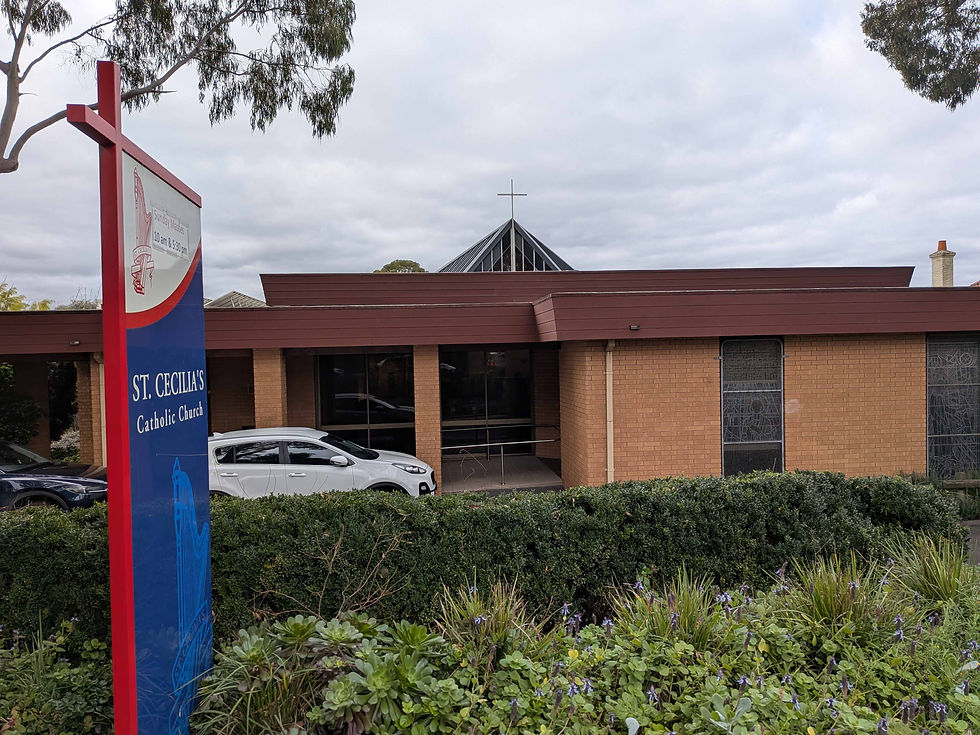
St Cecilia's and the affiliated school on Hillside Parade stemmed from Our Lady of Victories in Camberwell in 1929. Church services were held in the school for many years until the erection of a prefabricated aluminium structure as the church in 1952. The existing brick church was completed in 1976. Today, Father Kevin McGovern is known for his support of the LGBTQIA+ community.
FUN FACT: St Cecilia's is part of the South Camberwell Parish, one of the smallest in the Melbourne Archdiocese. In the 1970s, 417 families attended every Sunday.
Liberal Catholic Church

The Liberal Catholic Church arrived at Carroll Crescent around 1970. It is situated on the same block as the public hall where Gardiner Parish started. The Church derives its authority from the Old Catholic Church of Holland that separated from Rome in the 18th century.
FUN FACT: I can not find anything more about this Church's history and there's nothing at the Stonnington History Centre. If you know, drop me an email!
Kingdom Hall of Jehovah's Witnesses

Founded in Glen Iris in 1972, that's about all I can find about the history of the Jehovah's Witnesses in Glen Iris. Except for inclusion in the National Redress Scheme for survivors of institutional sexual abuse and that is probably not what they want at the forefront of their history. This building is located right on the fringe of Glen Iris near the corner of Burke and Tooronga Roads. If you know more, send me an email otherwise I will just have to wait for someone to drop by and tell me themselves.
Melbourne Chinese Christian Church
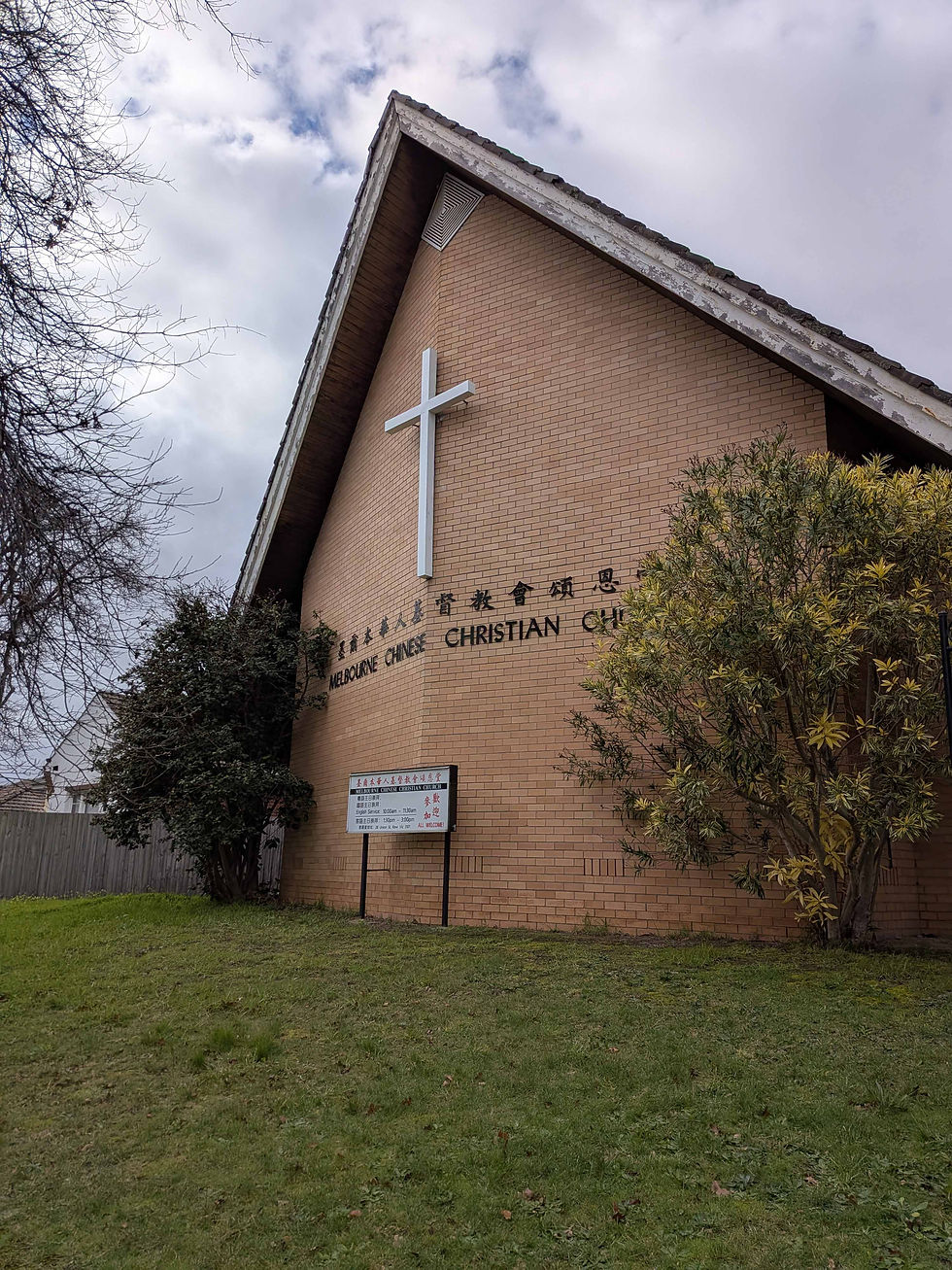
The Melbourne Chinese Christian Church (known as Song En Tang) is located within the old Summerhill Road Methodist Church, founded in 1925. The current building dates to 1963. The MCCC purchased it in 1985 to accommodate its growing congregation. The MCCC now hosts services in English, Cantonese, and Mandarin and runs a Chinese School.
FUN FACT: The original Summerhill Road church once housed a pipe organ built in 1865 and installed by George Fincham (who did all the organs in Melbourne). The organ now lives in a private residence in Craigie, Victoria adjacent to the historical site commemorating Kong Meng, a prominent 19th century Chinese-Australian businessman and advocate for equal rights for Chinese immigrants.
Bao Lin Chan Monastery

Another former Presbyterian Church, this time Glen Iris Presbyterian, the Bao Lin Chan Monastery on the corner of Allison Avenue and High Street brought Buddhism to Glen Iris in 2008. A Presbyterian Church stood on the site since 1925 and this building opened in November 1953. Glen Iris Presbyterian eventually joined with other small local churches to become the Glen Iris Hartwell Uniting Church in 2007. Today, the monks at Bao Lin Chan offer meditation classes, retreats, workshops and events.
FUN FACT: My husband has driven past this site nearly every day for 17 years and did not know it was there. It is that quiet and peaceful.
RELATED: The old Church of Christ buildings on Scott Grove/Malvern Road are for sale and expected to fetch more than $10 million from developers. This follows the Uniting Church sale of land that used to house Gardiner Pre-school for an undisclosed sum.


Just an FYI, there are no monks at the Bao Lin Buddhist Monastery in High Street, they are all nuns :)